Wildlife story
Wait, hes alive!
29 Aug 2026
A buzzard sat on a humans lap during a car ride half an hour to the vets. Bad idea?
The Buzzard We Thought Was Dead
We were driving one evening when we spotted a large bird lying on its back in the opposite lane.
We were convinced it was dead. But we turned around anyway.
It was a 60 mph road with a nasty bend, and we knew how dangerous roadkill could be for other animals. A fox, badger or bird might risk crossing the road for a meal, only to end up dead themselves and the cycle repeat. If the bird was beyond saving, the least we could do was move him somewhere safer for others.
So, back we went.
I climbed out of the car with absolutely no protective equipment whatsoever, unless you count the carrier bags I'd pulled over my arms because I didn't have any gloves.
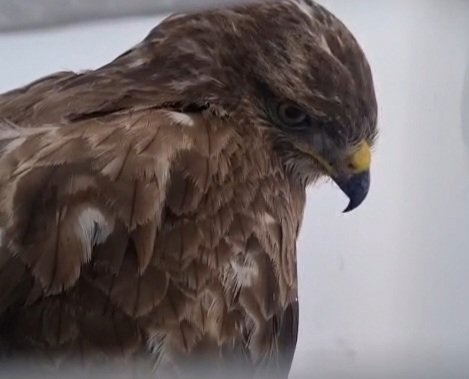
As I approached, I realised he was a buzzard. I bent down, picked him up and, fully believing he was dead, started talking to him.
"I'm sorry someone hit you. You're beautiful, and it's so sad."
Then, halfway through lifting him, two enormous, angry-looking eyes opened and stared straight into my soul. Jump scare of my life. He was very much not dead.
I was now holding a very alive bird of prey with no idea what I was doing, no equipment to contain him and absolutely no plan beyond the original assumption that I'd be moving a corpse.
We needed to get him help.
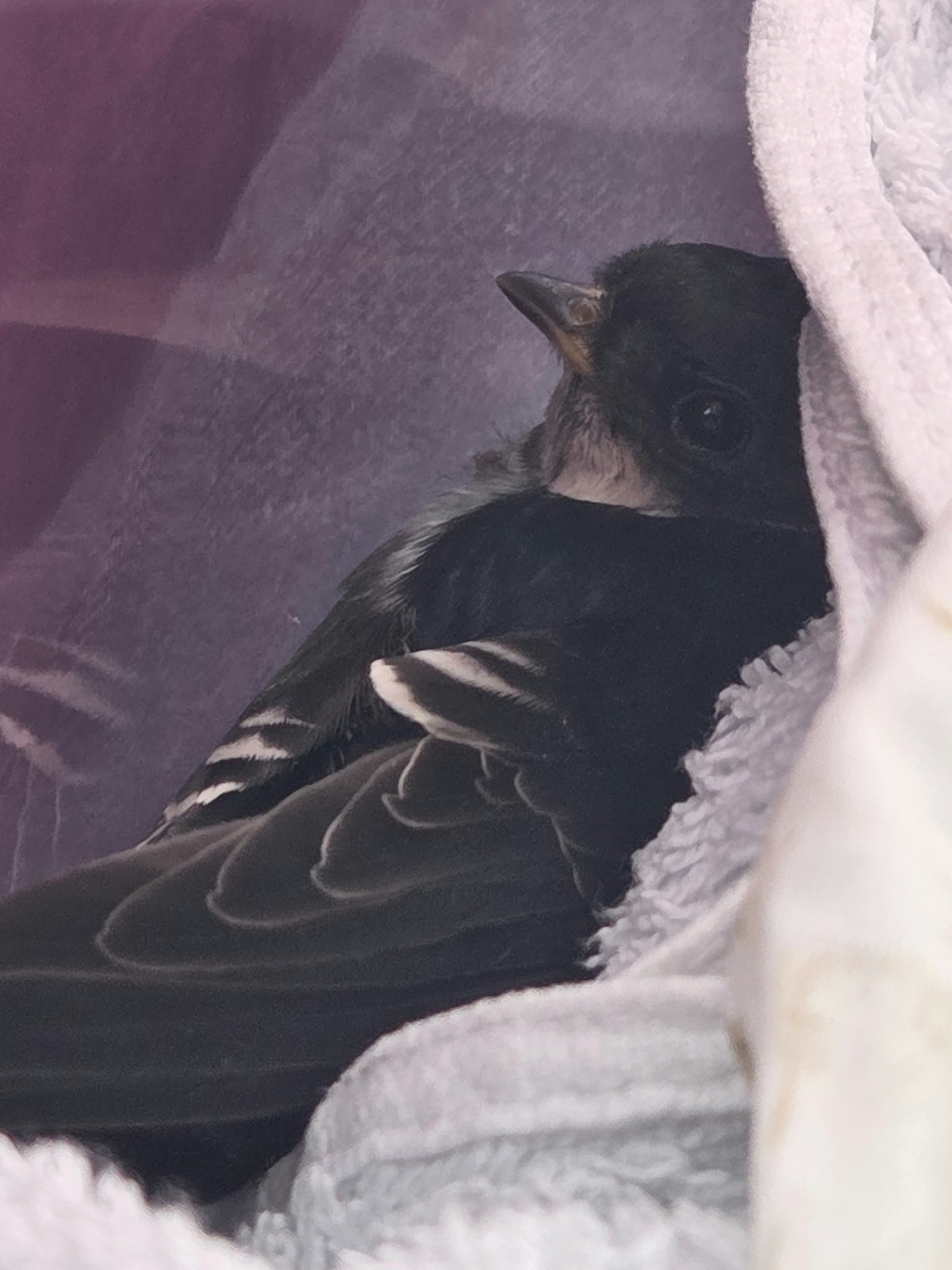
It was nighttime, and the bird-specific rescue was closed, so we headed straight for the emergency vets. In the meantime, our very undignified patient sat on my lap, wrapped in a jacket, with a carrier bag underneath for pooptection.
He was drifting in and out of consciousness. Sometimes he would become panicked and angry; at other times, he would be passive and mellow. I later learned that his willingness to sit on my lap was less a sign of trust and more proof of how unwell he was.
Half hour car ride later, back the way we had just came from, with our new unique lap dog we arrived at the emergency vets. We explained what had happened. They were upfront that they didn't have specialist training in birds, but they would do their best.
They examined him and told us his wing was fine and that he wasn't concussed.
I remember thinking that seemed rather odd, considering he looked very much like a bird with a concussion.
Then they extended his wing.
There was a crunching sound.
My immediate thought was, Oh, that's not good.
They told us it was normal, though, and explained that he was young. They believed he'd probably left the nest too early and got himself into trouble. According to their assessment, he was too young to be released and would need longer-term care until he was older.
They kept him overnight, and we said to contact us if anything was needed.
The following day, we got a call asking us to take him to Gower Bird Rescue. We hadnt gone there before, but we've now spoken to them about their work and dropped off other animals and I have to say Gower Bird Rescue is a wonderful organisation that deserves so much recognition for the work they do. We were relieved to know he would be in specialist hands.
There was just one small problem.
Our patient had apparently decided that being half-conscious was yesterday's business.
By collection time, he was much more alert and very much ready to take off, or to try. We had a box, thankfully, but no cage, so we had to keep the lid slightly ajar. He immediately recognised this as an excellent opportunity to escape.
We managed to get him there safely in the end, although I was suddenly very grateful that we hadn't tried transporting him like that the day before.
I'd actually given away a cage after my dog passed, and I remember deeply regretting that decision during all of this. We have one in the car now, prepped for crisis.
Lesson learned.
But the biggest surprise was still waiting for us at the rescue.
The vets had told us we were dealing with a youngster who'd left the nest too early. The rescue explained that he wasn't a baby at all.
He'd "been through a winter", and you could tell from his plumage. I'd never heard that expression before.
And then came the other news.
His wing wasn't fine.
He had a broken wing and a concussion.
His new diagnosis made a lot more sense. I couldn't help wondering whether the handling he'd experienced at the vets had aggravated his injuries.
That experience changed how we'll rank approaching vets over wildlife rescues in the future when it comes to exotic animals.
If a specialist rescue is open, we'll contact them first, even if it means travelling further. If an animal needs immediate emergency treatment, of course we'll prioritise that. In this case, with roughly ten hours until the bird rescue opened, I still believe taking him to the emergency vets was the right decision.
However, I'd think much more carefully before signing over responsibility for an animal in similar circumstances without first discussing the options.
We're also going to speak to more specialist rescues in advance, so we have some idea of what to do when the unexpected happens. Because, as it turns out, you can go from removing what you think is a dead bird from the road to transporting an angry buzzard on your lap in a remarkably short space of time.
Gower Bird Rescue also cares for hedgehogs, which is another reason we're glad to know about them. We left a donation after handing him over to help towards his care. Wildlife rehabilitation can be expensive, particularly when you're dealing with a bird of prey who needs months of treatment and recovery.
And he did get that chance.
For months, he recovered. He made it through rehabilitation and eventually reached the stage where he could begin flying again.
We'd hoped that would be the beginning of his return to the wild. They said they were hoping to soon call us so we could come watch him be released.
Sadly, this wasnt what happened.
When he started flying, it became clear that his vision was impaired. He circled incorrectly, and it became apparent that he wouldn't be able to hunt, navigate and survive independently in the wild.
There was no happy release into the countryside waiting for him. He had to be euthanised.
After everything he'd been through, that was a heartbreaking outcome. He'd survived the initial injury, received months of care and made it all the way to the point of flying again, only for an underlying problem to prevent him from having a viable life in the wild.
But I don't regret turning the car around.
We couldn't save him, and we couldn't give him the ending we'd wanted. What we could do was stop, get him help and give him a chance.
Sometimes, helping an animal doesn't mean saving its life. Sometimes, it means making sure it isn't left injured and frightened on the side of a road. Sometimes, it means giving it the opportunity to recover, even if that recovery ultimately reveals something you can't fix.
And sometimes, it means learning a few very important lessons about wildlife rescue, keeping a cage in the car, and never again assuming that a buzzard lying on its back is dead.
Especially when you're halfway through telling it how beautiful it is.
I'm still glad we turned around.